hkk.fyi/PM-TI
B.Sc. final project · University of Tehran · ICEE 2026

PM-TI

Sharper deep-brain stimulation.
No surgery. No new hardware.

StudentHassan Keshtkar
SupervisorDr. Hoda Ameri
SchoolECE · University of Tehran
PaperICEE 2026
scroll · or press →
Problem · 01

Millions live with a brain that misfires.

When the drugs stop working, the target sits deep inside the brain.
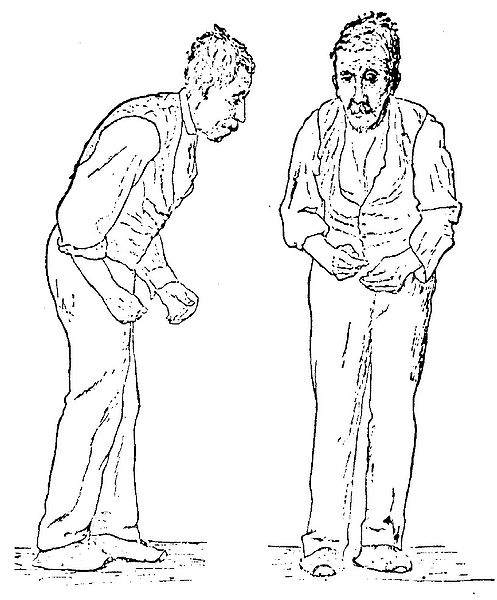
Gowers' 1886 sketch of Parkinson's disease 01 / 1886 · Gowers
Parkinson's8.5 M+ people
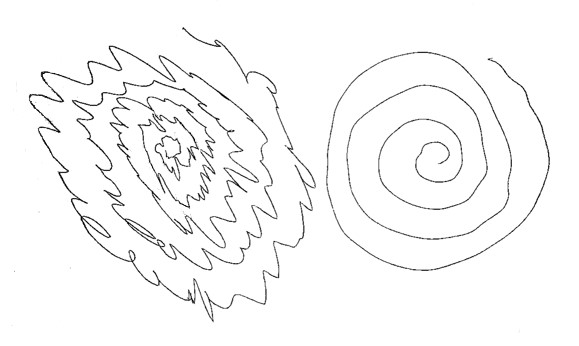
Spiral drawing test of an essential-tremor patient 02 / spiral test
Essential tremor~1 in 100
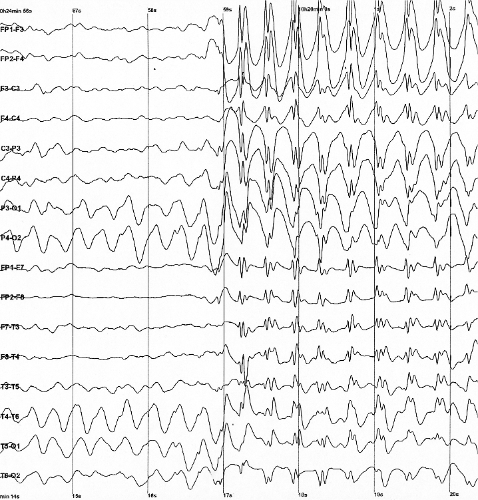
EEG 3 Hz spike-and-wave discharge 03 / EEG · spike-wave
Epilepsy50 M people
Solution · 01

Deep Brain Stimulation works.

Electrodes at the target. The tremor stops.

Solution · 01

A few volts, right where it matters.

Parkinson's · tremor · dystonia · epilepsy — in clinics since the 90s.
Problem · 02

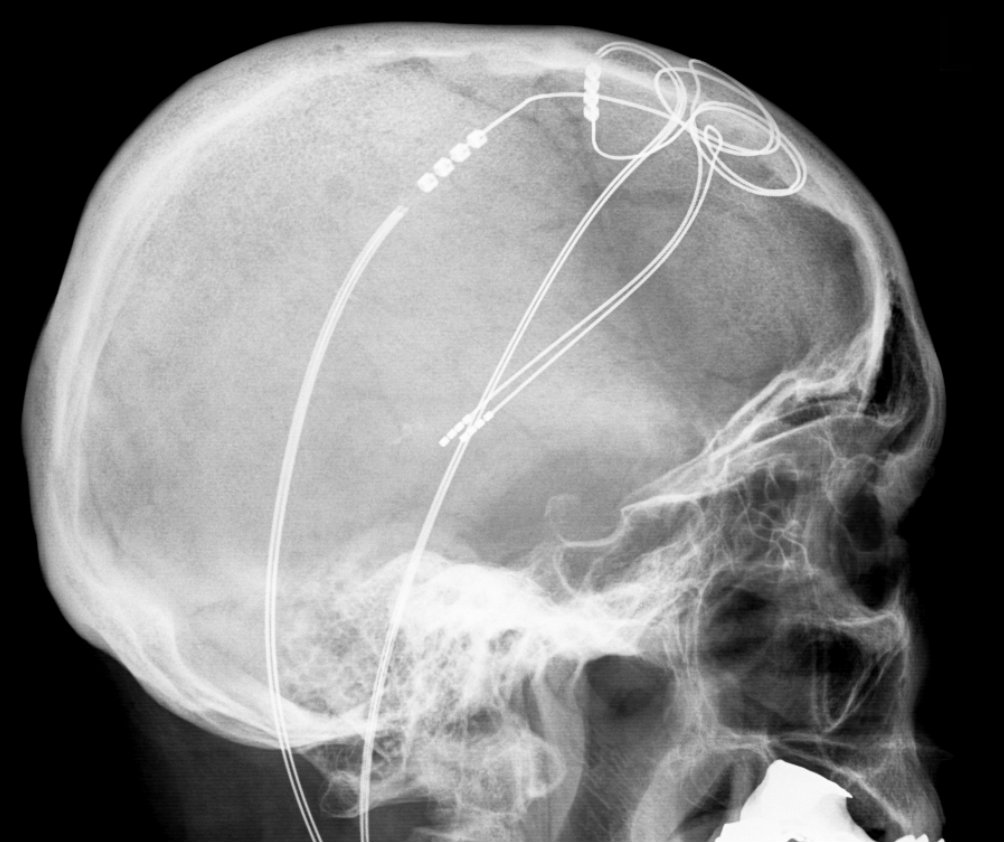
But it needs brain surgery.

skull openinginfection · bleedinghardware for life
Lateral skull X-ray with two DBS leads
X-ray · two DBS leads · CC BY-SA
Solution · 02

Temporal Interference.

Stimulate deep — from the scalp.

Solution · 02

Two kHz fields. Neurons ignore each one.

2000 Hz from one pair, 2010 Hz from the other.

Solution · 02

Where they meet, a 10 Hz beat is born.

Neurons follow the beat — only where both fields overlap.
Solution · 02 · in two lines

Two frequencies, one beat.

TI · 1 s1(t)=E1cos(ω1t) , s2(t)=E2cos(ω2t) , ω2=ω1+Δω
TI · 2 · envelope |EAM|TI =2min(E1,E2)

The weaker field sets the envelope. Nothing else.

E₁ · 2000 Hz
E₂ · 2010 Hz
E₁ + E₂envelope · 10 Hz
200 ms
Problem · 03

The hotspot is wide.

30 mm across a 70 mm phantom. The neighbours get stimulated too.

more electrodes more channels bigger hardware → a smarter waveform
k = 1 · conventional TI · |EAM,y|
01 · envelope
Solution · 03 · our work · ICEE 2026

PM-TI: one carrier, opposite phase modulation.

PM-TI · 1 s1(t)=E1cos(ωct+φ(t)) , s2(t)=E2cos(ωctφ(t)) φ(t)=arccos(cos(ωmt)k) ,k1 ,ωmωc
envelope · E₁ ≠ E₂
E₂ / E₁0.60

Unequal fields get penalised. k turns the penalty up.
No new electrodes — a new waveform.

Solution · 03 · one number to tune

Turn k up. The focus tightens.

Same electrodes. Same current. Same peak.

1.00
k · focusing parameter
29.5mm
FWHM · along y = 0
1 3
|EAM,y| · live · auto, or drag the slider
Results · simulation · 70 mm phantom

Same peak. A third of the width.

k = 1 · conventional TI
k = 2 · PM-TI
k = 3 · PM-TI
0.0mm
FWHM · k = 1
 
0.0mm
FWHM · k = 2
−53 %
0.0mm
FWHM · k = 3
−69 %
envelope along y = 0k=1k=2k=3
peak change < 0.5 %
Live · sweep along x · compare the envelope

Off-centre, the beat dies faster with k.

k = 1
V/m
|EAM|
k = 2
V/m
|EAM|
k = 3
V/m
|EAM|
x · mm · along y = 0
x = 0.0 mm
drag on any map or the profile to scrub
Results · measurement

We built it. We measured it.

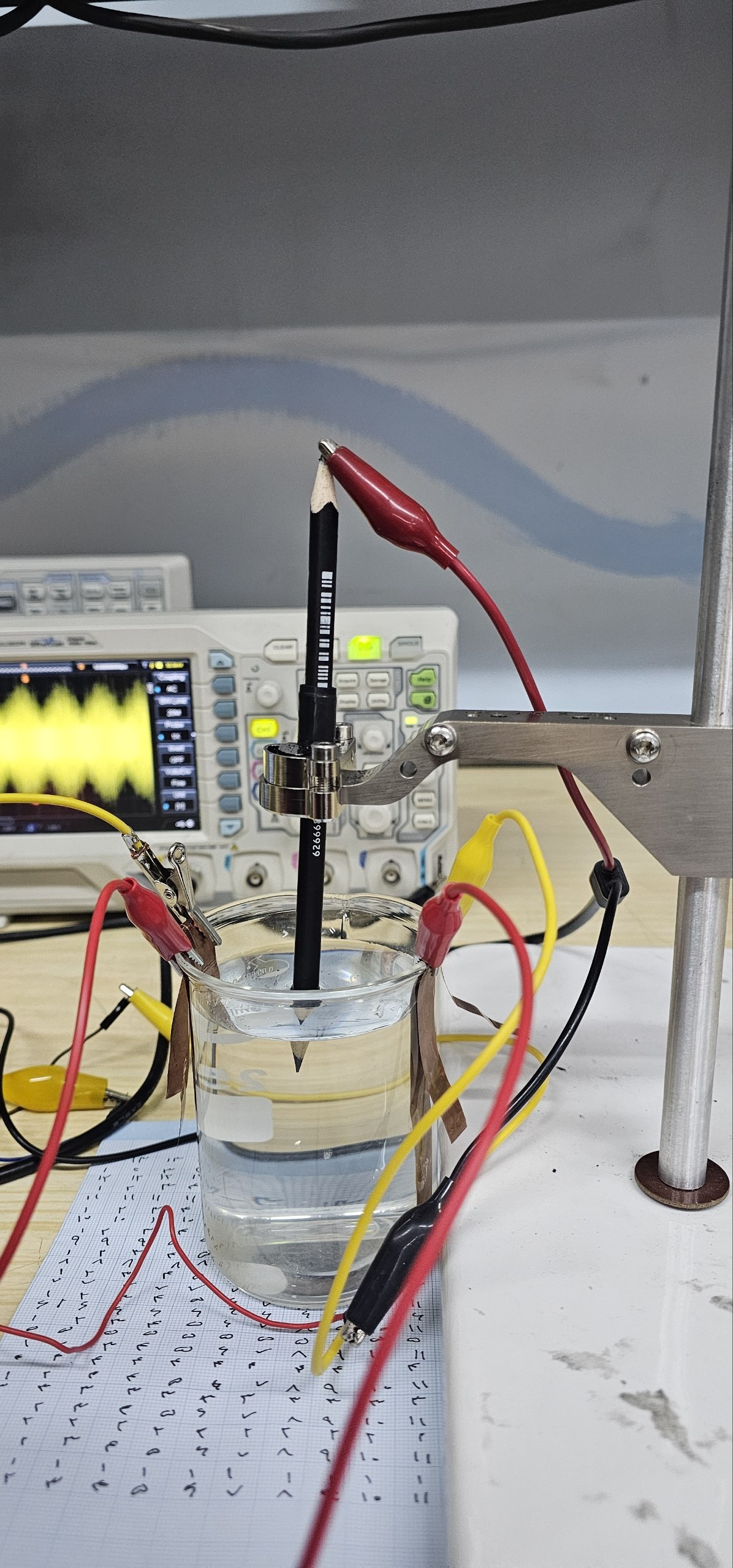
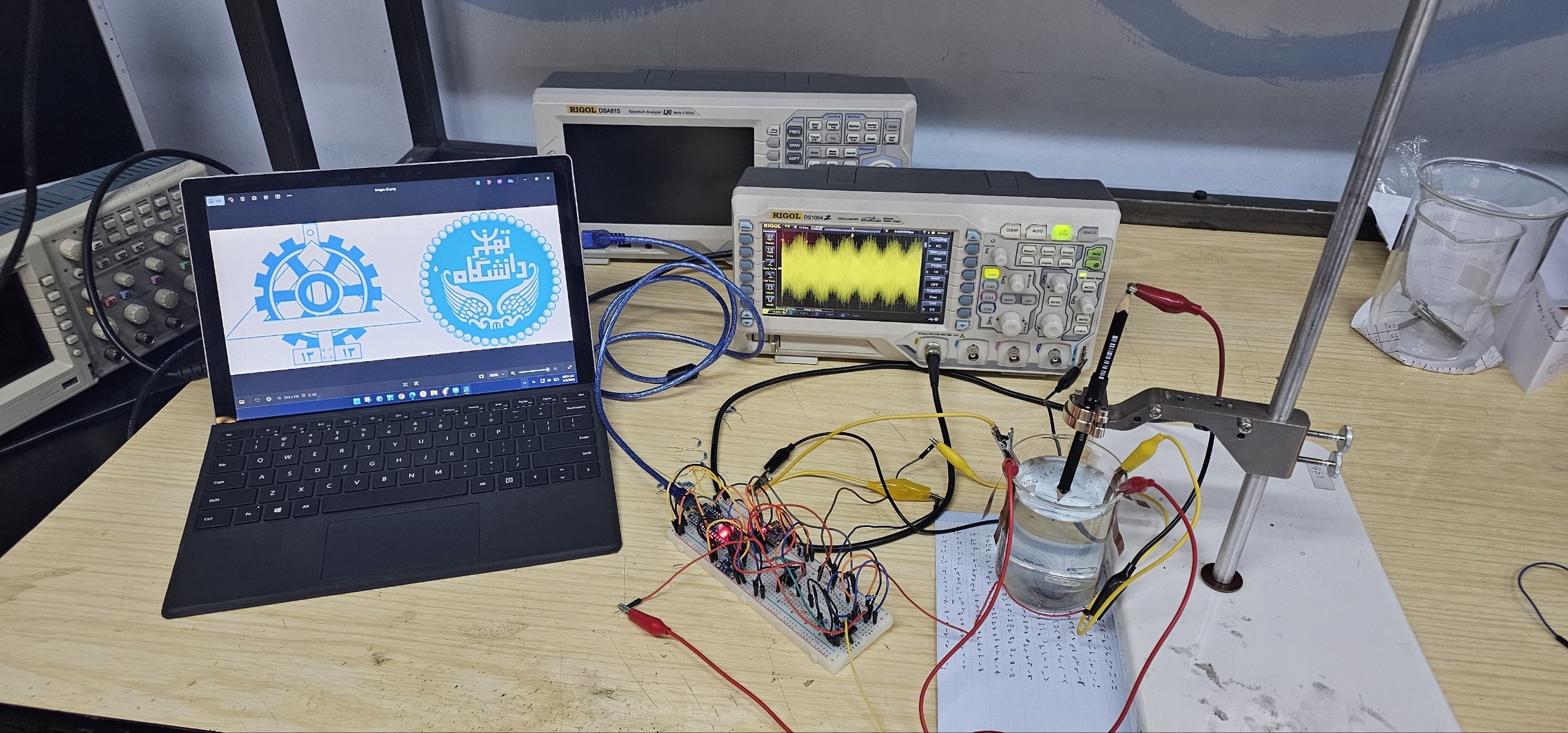
Bench test: saline phantom, probe, oscilloscope showing the 10 Hz beat
21 Aug 2026 · test day · the beat on the scope
Probe in the saline phantom
probe · 10 mm pitch
phantom70 mm saline
scan7 × 7 · 49 points
carrier · beat2005 Hz · 10 Hz
runsk = 1 · 2 · 3
Results · simulation vs. measurement

The phantom agrees.

k = 1
k = 2
k = 3
simulation
measurement
0.00
correlation · simulation vs measurement
0.0mm
measured FWHM · k = 2 · from 33.9 mm
−49 %
0.0mm
measured FWHM · k = 3 · from 33.9 mm
−58 %
recorded at the centre · k = 3 · band-passed
240 ms
PM-TI · phase-modulated temporal interference

Sharper. Non-invasive.
Software-only.

Same electrodes. Same current. A third of the footprint.

−69%
focus width
0
surgery
0
new electrodes
StudentHassan Keshtkar
SupervisorDr. Hoda Ameri
School of ECEUniversity of Tehran
PaperICEE 2026
scan · this page, live hkk.fyi/pmti